

7 email marketing challenges for healthcare brands (and how to overcome them)

Email marketing in healthcare faces challenges like low open rates, spam filtering, and declining engagement. With email usage and healthcare spending rising, optimizing email strategies is crucial for success. Poor subject lines, sender reputation, and lack of personalization can hinder performance. Overcoming these challenges requires improving audience targeting, ensuring compliance, and leveraging data-driven insights to boost engagement and ROI.
.jpg)
How to improve healthcare email marketing: 7 challenges & proven strategies
Businesses often struggle with email marketing challenges that directly affect their revenue. If your emails end up in spam folders or your product announcements go unnoticed, you may lose valuable opportunities to engage with customers and boost sales. Many healthcare brands see their open rates decline month after month, unsure why their subscribers aren’t interacting with their messages. Email usage and healthcare spending are rising trends, with businesses sending billions of emails daily and spending trillion on healthcare annually. This makes email marketing for healthcare a powerful and essential strategy for the industry.
The average email open rate for medical, dental, and healthcare email marketing is 21.72%. This means that, on average, just over one in five recipients open emails from businesses in these industries. If your open rates are lower, it may indicate issues with subject lines, sender reputation, or audience engagement. Optimizing your email strategy can help you overcome challenges and improve overall performance. We'll cover everything from avoiding spam filters and reducing unsubscribe rates to creating personalized campaigns that drive engagement. Plus, you’ll gain actionable insights on tracking ROI and ensuring compliance with email regulations.
The importance of email marketing in healthcare
Email marketing is vital in healthcare e-commerce as it keeps customers informed, promotes relevant products, and nurtures trust. Unlike other industries, healthcare brands must navigate strict regulations while ensuring their messages are engaging and valuable. A well-executed email strategy can:
- Increase customer retention through personalized communication
- Provide essential updates on new or improved healthcare products
- Educate consumers on product benefits and safe usage
- Drive conversions with targeted promotional offers
- Build a credible and authoritative brand presence
Email marketing can strengthen the relationship between healthcare brands and their customers when done correctly, increasing loyalty and sales.
7 common healthcare email marketing challenges
Navigating HIPAA and data privacy regulations
Healthcare brands must comply with strict regulations such as the Health Insurance Portability and Accountability Act (HIPAA) and the General Data Protection Regulation (GDPR). These laws dictate how personal health information is collected, stored, and shared in marketing communications. The challenge lies in balancing compliance with effective marketing strategies. Failure to adhere to regulations can lead to hefty fines and loss of customer trust, making it imperative for healthcare brands to tread carefully.
Gaining and maintaining trust
Trust is a crucial factor in healthcare email marketing. Consumers are highly cautious about the brands they engage with due to concerns about misleading claims, data privacy, and unethical marketing practices. Many people have had negative experiences with healthcare-related advertising, making them skeptical of promotional emails. If a brand fails to establish credibility, consumers may unsubscribe or ignore emails altogether, significantly reducing engagement rates.
Avoiding spam filters and improving deliverability
Healthcare-related emails are often flagged as spam due to the nature of the content. Words commonly associated with healthcare, such as “prescription,” “treatment,” or “cure,” can trigger spam filters, resulting in low deliverability rates. Additionally, poor sender reputation, high bounce rates, or excessive use of promotional content can further impact the ability of healthcare brands to reach their audience’s inbox. This challenge makes it difficult for brands to communicate their messages effectively and maximize email engagement.
Personalizing content without overstepping privacy boundaries
Consumers expect personalized experiences, but healthcare brands must be careful not to over-personalize messages in ways that may seem intrusive or violate privacy laws. Unlike other industries, where personal recommendations can be used freely, healthcare email marketing must balance relevance and discretion. If done incorrectly, personalized emails can become invasive, making consumers uncomfortable and eroding trust in the brand.
Crafting engaging yet compliant promotional content
Promoting healthcare products via email presents a unique challenge, as marketers must ensure that their messaging remains engaging while staying within regulatory guidelines. Unlike other industries, healthcare brands cannot make exaggerated claims or use emotionally charged language to drive sales. Instead, they must focus on education and factual content, which can sometimes make emails feel less compelling. The challenge lies in finding creative ways to make content informative and persuasive without violating compliance standards.
Managing high unsubscribe rates
Healthcare email lists often suffer from high unsubscribe rates for various reasons, including excessive email frequency, lack of relevance, or concerns over data privacy. Many consumers are wary of receiving too many healthcare-related emails, especially if they feel overwhelmed by promotions or irrelevant content. Once a subscriber opts out, it becomes increasingly difficult to re-engage them, making retention a significant challenge for healthcare brands.
Tracking email marketing ROI and performance
Measuring the success of healthcare email marketing campaigns can be complex due to privacy regulations and tracking limitations. Unlike other industries that can rely on detailed customer data for optimization, healthcare brands must be mindful of compliance restrictions that may limit their ability to track engagement. Understanding what works and what doesn’t requires strategic testing and careful analysis, making it harder for brands to refine their approach and maximize ROI.

7 best practices for healthcare email marketing
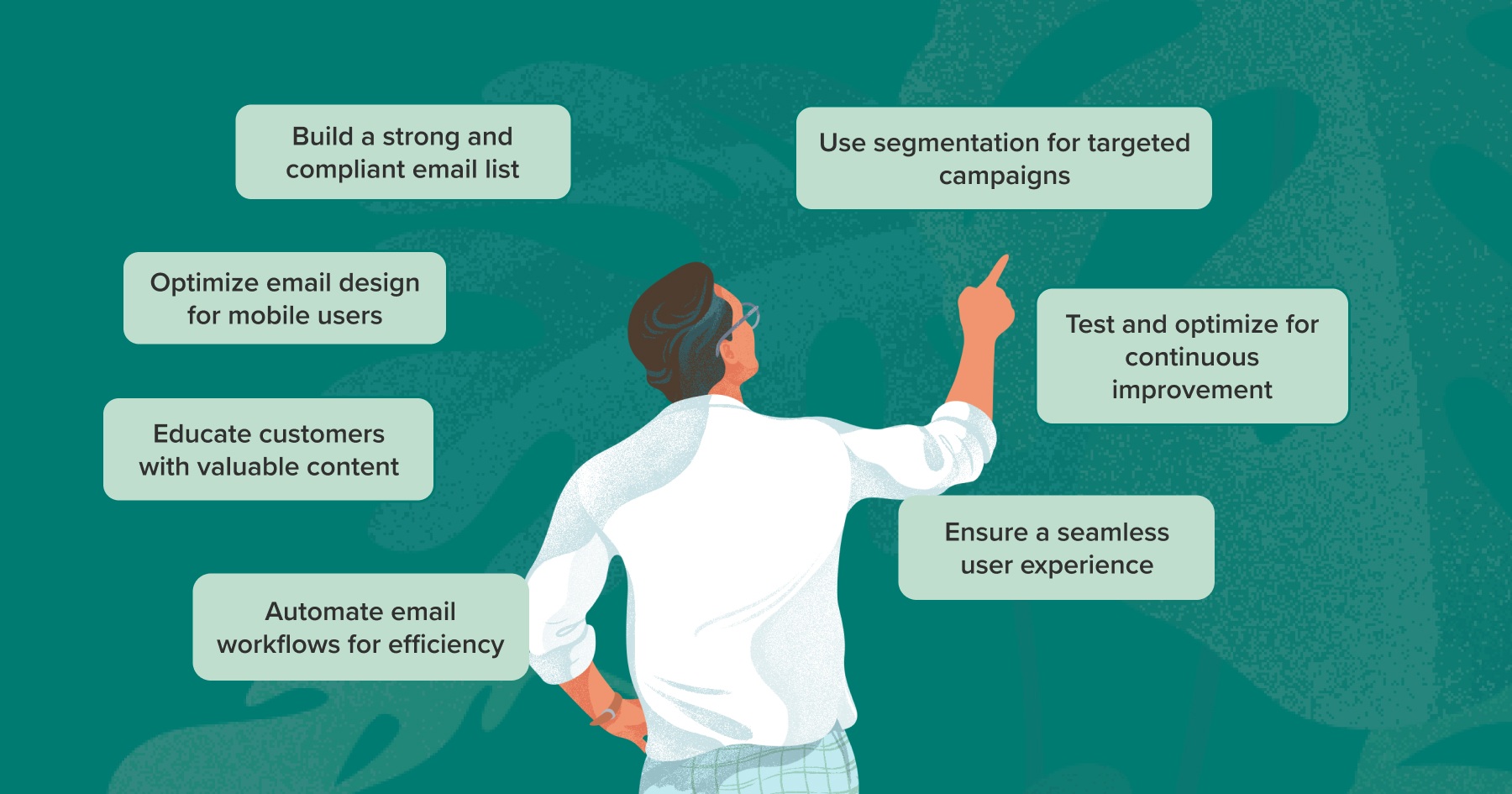
Build a strong and compliant email list
A high-quality email list starts with ethical and legal collection methods. Healthcare brands should use precise opt-in forms that explicitly state what subscribers can expect from their emails. This ensures compliance with HIPAA, GDPR, and CAN-SPAM regulations while reducing spam complaints. Offering incentives such as discounts on first purchases or free educational resources can encourage sign-ups while ensuring that the audience genuinely wants to receive emails.
Use segmentation for targeted campaigns
Not all subscribers have the exact needs. Segmenting an email list based on purchase history, engagement level, and product interest allows healthcare brands to send relevant messages to the right audience. For example, a customer who recently purchased supplements may be interested in educational content about proper usage, while another looking for skincare products may respond better to promotional offers. Segmentation helps improve engagement rates while minimizing the risk of spam complaints.
Optimize email design for mobile users
Many emails are opened on mobile devices, making responsive design essential. Emails should be easily read, visually appealing, and properly formatted for small screens. Clear fonts, large buttons, and a concise layout ensure a seamless experience for mobile users. Additionally, minimizing large images and ensuring fast loading times prevents frustration and encourages higher interaction rates.
Educate customers with valuable content
Consumers are more likely to engage with emails that provide helpful information rather than just promotional offers. Healthcare brands can establish authority and build trust by sharing educational content, such as guides on product benefits, proper usage, and expert tips. Providing credible sources and avoiding exaggerated claims ensures compliance while improving the brand’s reputation as a trusted resource.
Automate email workflows for efficiency
Automation is a game-changer for healthcare email marketing. Brands can set up automated workflows using the Klaviyo email marketing tool for welcome emails, order confirmations, replenishment reminders, and abandoned cart recovery. These automated sequences save time while ensuring consistent communication with customers. For instance, a vitamin supplements retailer can send automated reminders when a customer is due for a refill, increasing repeat purchases without additional manual effort.
Test and optimize for continuous improvement
Successful email marketing requires ongoing testing and refinement. A/B testing subject lines, call-to-action buttons, and email layouts can help identify what resonates best with subscribers. Additionally, tracking key performance indicators (KPIs) such as open rates, click-through rates, and conversion rates provides insights into what’s working and needs improvement. Regular optimization ensures that email campaigns stay effective and relevant over time.
Ensure a seamless user experience
A well-optimized email campaign should create a frictionless experience for subscribers. This means ensuring all links work correctly, landing pages are optimized for conversions, and emails load quickly. Additionally, making it easy for customers to manage their preferences or opt out if needed can improve brand reputation and reduce spam complaints. A positive user experience leads to higher engagement and long-term customer loyalty.
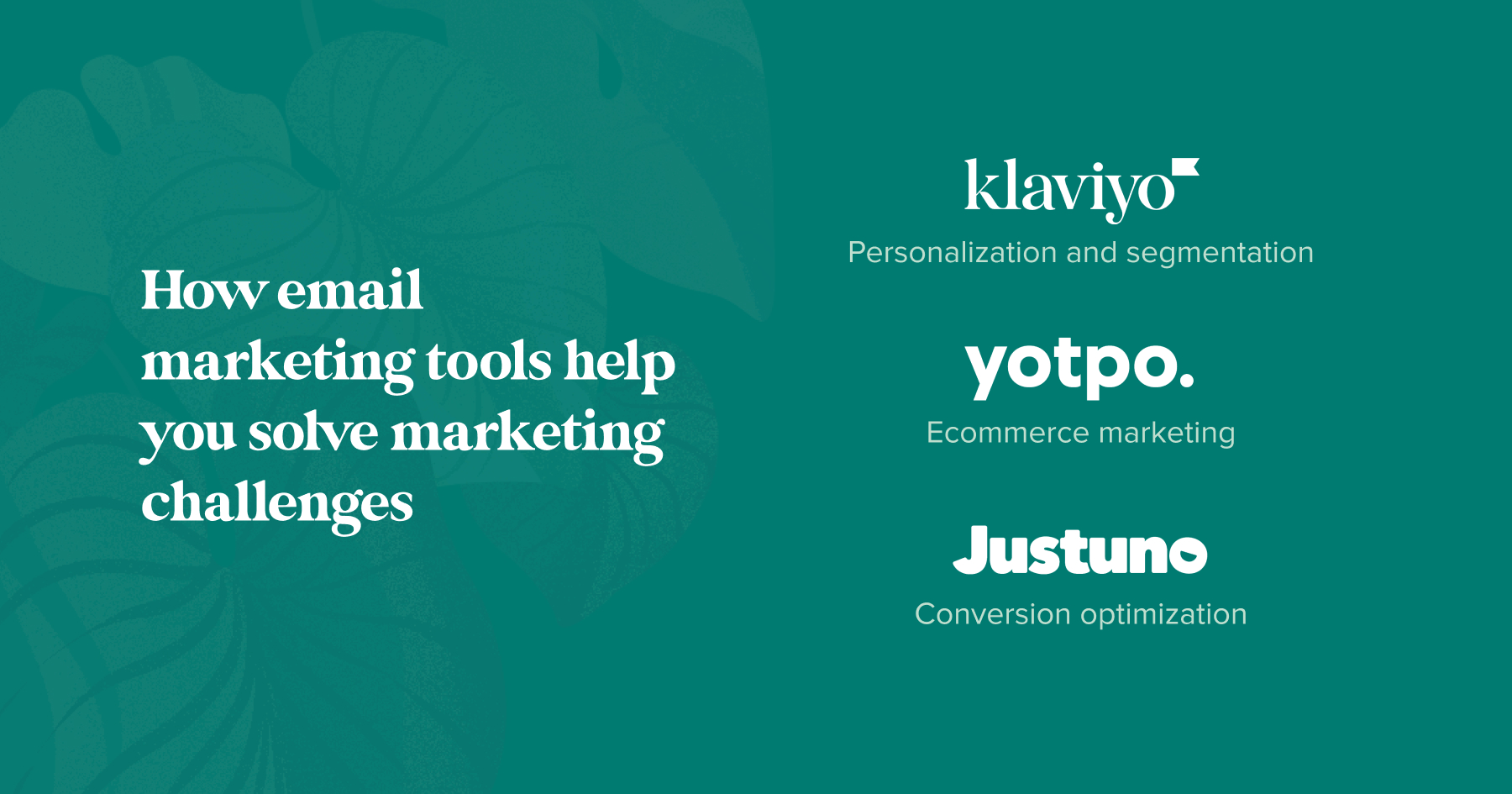
How email marketing tools help you solve marketing challenges
Let’s explore how each tool helps solve healthcare email marketing mistakes:
- Klaviyo: This tool enhances personalization with advanced segmentation, ensuring customers receive relevant emails based on their behavior and preferences. Automated email flows like abandoned cart reminders and post-purchase follow-ups help increase conversions. Klaviyo’s email marketing data-driven insights allow businesses to refine their messaging, improving engagement and customer retention.
- Justuno: Known for its AI-powered pop-ups and exit-intent technology, Justuno helps capture leads before they leave a website. It enables businesses to create targeted offers, such as discounts for first-time buyers, to boost conversions. Justuno integrates with email platforms, ensuring a seamless transition from visitor engagement to email marketing for healthcare campaigns.
- Yotpo: This tool focuses on customer retention by incorporating user-generated content, such as reviews and testimonials, into email campaigns. Yotpo also offers referral and rewards programs, encouraging repeat purchases. In addition to its powerful review and loyalty features, Yotpo now offers its own email and SMS platform, enabling brands to create targeted communication strategies directly within the tool. Yotpo’s data-driven approach ensures that emails build trust and loyalty, ultimately increasing lifetime customer value.
By combining these tools, businesses can create robust healthcare email marketing statistics that drive engagement, conversions, and long-term customer relationships.
Final thoughts
Email marketing is a powerful communication tool for healthcare organizations, but its success depends on strategic execution. Marketing challenges such as low engagement, competition, and regulatory restrictions can hinder success. Businesses can overcome these obstacles by implementing strategic solutions—such as audience segmentation, personalization, and automation—and create impactful email campaigns that drive patient and customer engagement.
At Growth Gurus, we specialize in helping e-commerce healthcare brands craft high-performing email campaigns that drive results. Our email marketing agency for ecommerce leverages automation, personalization, and data-driven insights to ensure every campaign delivers maximum impact. With our email marketing campaign management, brands can optimize communication strategies while maintaining compliance and consumer trust.
.jpg)
.jpg)
.jpg)
.jpg)
.jpg)
.jpg)
.jpg)
.jpg)


.jpg)
.jpg)


.jpg)


.jpg)


.png)

How to improve healthcare email marketing: 7 challenges & proven strategies
Businesses often struggle with email marketing challenges that directly affect their revenue. If your emails end up in spam folders or your product announcements go unnoticed, you may lose valuable opportunities to engage with customers and boost sales. Many healthcare brands see their open rates decline month after month, unsure why their subscribers aren’t interacting with their messages. Email usage and healthcare spending are rising trends, with businesses sending billions of emails daily and spending trillion on healthcare annually. This makes email marketing for healthcare a powerful and essential strategy for the industry.
The average email open rate for medical, dental, and healthcare email marketing is 21.72%. This means that, on average, just over one in five recipients open emails from businesses in these industries. If your open rates are lower, it may indicate issues with subject lines, sender reputation, or audience engagement. Optimizing your email strategy can help you overcome challenges and improve overall performance. We'll cover everything from avoiding spam filters and reducing unsubscribe rates to creating personalized campaigns that drive engagement. Plus, you’ll gain actionable insights on tracking ROI and ensuring compliance with email regulations.
The importance of email marketing in healthcare
Email marketing is vital in healthcare e-commerce as it keeps customers informed, promotes relevant products, and nurtures trust. Unlike other industries, healthcare brands must navigate strict regulations while ensuring their messages are engaging and valuable. A well-executed email strategy can:
- Increase customer retention through personalized communication
- Provide essential updates on new or improved healthcare products
- Educate consumers on product benefits and safe usage
- Drive conversions with targeted promotional offers
- Build a credible and authoritative brand presence
Email marketing can strengthen the relationship between healthcare brands and their customers when done correctly, increasing loyalty and sales.
7 common healthcare email marketing challenges
Navigating HIPAA and data privacy regulations
Healthcare brands must comply with strict regulations such as the Health Insurance Portability and Accountability Act (HIPAA) and the General Data Protection Regulation (GDPR). These laws dictate how personal health information is collected, stored, and shared in marketing communications. The challenge lies in balancing compliance with effective marketing strategies. Failure to adhere to regulations can lead to hefty fines and loss of customer trust, making it imperative for healthcare brands to tread carefully.
Gaining and maintaining trust
Trust is a crucial factor in healthcare email marketing. Consumers are highly cautious about the brands they engage with due to concerns about misleading claims, data privacy, and unethical marketing practices. Many people have had negative experiences with healthcare-related advertising, making them skeptical of promotional emails. If a brand fails to establish credibility, consumers may unsubscribe or ignore emails altogether, significantly reducing engagement rates.
Avoiding spam filters and improving deliverability
Healthcare-related emails are often flagged as spam due to the nature of the content. Words commonly associated with healthcare, such as “prescription,” “treatment,” or “cure,” can trigger spam filters, resulting in low deliverability rates. Additionally, poor sender reputation, high bounce rates, or excessive use of promotional content can further impact the ability of healthcare brands to reach their audience’s inbox. This challenge makes it difficult for brands to communicate their messages effectively and maximize email engagement.
Personalizing content without overstepping privacy boundaries
Consumers expect personalized experiences, but healthcare brands must be careful not to over-personalize messages in ways that may seem intrusive or violate privacy laws. Unlike other industries, where personal recommendations can be used freely, healthcare email marketing must balance relevance and discretion. If done incorrectly, personalized emails can become invasive, making consumers uncomfortable and eroding trust in the brand.
Crafting engaging yet compliant promotional content
Promoting healthcare products via email presents a unique challenge, as marketers must ensure that their messaging remains engaging while staying within regulatory guidelines. Unlike other industries, healthcare brands cannot make exaggerated claims or use emotionally charged language to drive sales. Instead, they must focus on education and factual content, which can sometimes make emails feel less compelling. The challenge lies in finding creative ways to make content informative and persuasive without violating compliance standards.
Managing high unsubscribe rates
Healthcare email lists often suffer from high unsubscribe rates for various reasons, including excessive email frequency, lack of relevance, or concerns over data privacy. Many consumers are wary of receiving too many healthcare-related emails, especially if they feel overwhelmed by promotions or irrelevant content. Once a subscriber opts out, it becomes increasingly difficult to re-engage them, making retention a significant challenge for healthcare brands.
Tracking email marketing ROI and performance
Measuring the success of healthcare email marketing campaigns can be complex due to privacy regulations and tracking limitations. Unlike other industries that can rely on detailed customer data for optimization, healthcare brands must be mindful of compliance restrictions that may limit their ability to track engagement. Understanding what works and what doesn’t requires strategic testing and careful analysis, making it harder for brands to refine their approach and maximize ROI.
7 best practices for healthcare email marketing
Build a strong and compliant email list
A high-quality email list starts with ethical and legal collection methods. Healthcare brands should use precise opt-in forms that explicitly state what subscribers can expect from their emails. This ensures compliance with HIPAA, GDPR, and CAN-SPAM regulations while reducing spam complaints. Offering incentives such as discounts on first purchases or free educational resources can encourage sign-ups while ensuring that the audience genuinely wants to receive emails.
Use segmentation for targeted campaigns
Not all subscribers have the exact needs. Segmenting an email list based on purchase history, engagement level, and product interest allows healthcare brands to send relevant messages to the right audience. For example, a customer who recently purchased supplements may be interested in educational content about proper usage, while another looking for skincare products may respond better to promotional offers. Segmentation helps improve engagement rates while minimizing the risk of spam complaints.
Optimize email design for mobile users
Many emails are opened on mobile devices, making responsive design essential. Emails should be easily read, visually appealing, and properly formatted for small screens. Clear fonts, large buttons, and a concise layout ensure a seamless experience for mobile users. Additionally, minimizing large images and ensuring fast loading times prevents frustration and encourages higher interaction rates.
Educate customers with valuable content
Consumers are more likely to engage with emails that provide helpful information rather than just promotional offers. Healthcare brands can establish authority and build trust by sharing educational content, such as guides on product benefits, proper usage, and expert tips. Providing credible sources and avoiding exaggerated claims ensures compliance while improving the brand’s reputation as a trusted resource.
Automate email workflows for efficiency
Automation is a game-changer for healthcare email marketing. Brands can set up automated workflows using the Klaviyo email marketing tool for welcome emails, order confirmations, replenishment reminders, and abandoned cart recovery. These automated sequences save time while ensuring consistent communication with customers. For instance, a vitamin supplements retailer can send automated reminders when a customer is due for a refill, increasing repeat purchases without additional manual effort.
Test and optimize for continuous improvement
Successful email marketing requires ongoing testing and refinement. A/B testing subject lines, call-to-action buttons, and email layouts can help identify what resonates best with subscribers. Additionally, tracking key performance indicators (KPIs) such as open rates, click-through rates, and conversion rates provides insights into what’s working and needs improvement. Regular optimization ensures that email campaigns stay effective and relevant over time.
Ensure a seamless user experience
A well-optimized email campaign should create a frictionless experience for subscribers. This means ensuring all links work correctly, landing pages are optimized for conversions, and emails load quickly. Additionally, making it easy for customers to manage their preferences or opt out if needed can improve brand reputation and reduce spam complaints. A positive user experience leads to higher engagement and long-term customer loyalty.
How email marketing tools help you solve marketing challenges
Let’s explore how each tool helps solve healthcare email marketing mistakes:
- Klaviyo: This tool enhances personalization with advanced segmentation, ensuring customers receive relevant emails based on their behavior and preferences. Automated email flows like abandoned cart reminders and post-purchase follow-ups help increase conversions. Klaviyo’s email marketing data-driven insights allow businesses to refine their messaging, improving engagement and customer retention.
- Justuno: Known for its AI-powered pop-ups and exit-intent technology, Justuno helps capture leads before they leave a website. It enables businesses to create targeted offers, such as discounts for first-time buyers, to boost conversions. Justuno integrates with email platforms, ensuring a seamless transition from visitor engagement to email marketing for healthcare campaigns.
- Yotpo: This tool focuses on customer retention by incorporating user-generated content, such as reviews and testimonials, into email campaigns. Yotpo also offers referral and rewards programs, encouraging repeat purchases. In addition to its powerful review and loyalty features, Yotpo now offers its own email and SMS platform, enabling brands to create targeted communication strategies directly within the tool. Yotpo’s data-driven approach ensures that emails build trust and loyalty, ultimately increasing lifetime customer value.
By combining these tools, businesses can create robust healthcare email marketing statistics that drive engagement, conversions, and long-term customer relationships.
Final thoughts
Email marketing is a powerful communication tool for healthcare organizations, but its success depends on strategic execution. Marketing challenges such as low engagement, competition, and regulatory restrictions can hinder success. Businesses can overcome these obstacles by implementing strategic solutions—such as audience segmentation, personalization, and automation—and create impactful email campaigns that drive patient and customer engagement.
At Growth Gurus, we specialize in helping e-commerce healthcare brands craft high-performing email campaigns that drive results. Our email marketing agency for ecommerce leverages automation, personalization, and data-driven insights to ensure every campaign delivers maximum impact. With our email marketing campaign management, brands can optimize communication strategies while maintaining compliance and consumer trust.
More articles
Ready to grow your business?
If you want your business to experience more sales and faster growth, all you need to do is book a meeting with us today.


