

Email marketing for startups: A 2026 guide to growth & deliverability

Email remains one of the most reliable growth channels for startups in 2026. While paid ads are becoming more expensive and unpredictable, email offers control, consistency, and strong returns when handled with care. This guide explores how startups can build a high-performing email strategy from the ground up, with a clear focus on growth and deliverability.

A 2026 guide to email marketing for startup growth
Startups face a unique challenge when it comes to marketing. Budgets are tight, competition is intense, and every decision needs to deliver measurable results. Email marketing for startups allows brands to communicate directly with their audience, build trust over time, and drive consistent revenue without relying heavily on paid channels.
In 2026, email marketing is more sophisticated than ever because customer expectations are higher, inbox providers are stricter, and personalization is no longer optional. The startups that succeed are those that combine strategy, technology, and thoughtful messaging. This guide breaks down how to do exactly that while maintaining strong deliverability and long-term growth.
Why email still drives startup growth in 2026
Email remains one of the highest-performing channels for return on investment. According to recent industry data, email marketing generates an average return of $36 for every $1 spent.
For startups, this matters because email:
- Provides a direct line to customers without dependency on algorithms or ad platforms, which can change overnight and affect visibility.
- Supports the entire customer journey, from acquisition and onboarding to retention and repeat purchases, making it a long-term growth driver.
- Allows detailed tracking and segmentation, helping startups understand customer behavior and improve decision-making over time.
7 startup email marketing best practices
Building a high-quality email list from day one
A strong email strategy starts with the right audience. Many startups rush this step and focus on quantity over quality, leading to poor engagement and deliverability issues.
Here is how to build a list that supports sustainable growth:
- Use clear and compelling signup forms: Place forms strategically on your website, product pages, and checkout flow. Offer value in exchange for signups, such as discounts, early access, or useful content.
- Focus on intent-driven subscribers: Refrain from purchasing lists or adding contacts without their explicit permission. Organic growth leads to higher engagement and better sender reputation.
- Segment from the beginning: Capture key information such as preferences or purchase intent. Even basic segmentation helps tailor communication later.
A clean and engaged list is the foundation of effective startup email marketing because it makes it easier to achieve competitive deliverability rates.
Crafting campaigns that people want to open and click
Creating effective email marketing campaigns for startups requires a balance between creativity and clarity. Every email should have a purpose and guide the reader toward a specific action.
Key elements to focus on to improve open and click rates include:
- Subject lines that feel personal and relevant: Avoid overly promotional language and instead, focus on curiosity, value, or urgency that aligns with the audience’s needs.
- Clear and concise messaging: Keep emails easy to scan by using short paragraphs, strong headings, and a single primary call to action.
- Visual design that supports the message: Design should enhance readability, not distract from it. Mobile optimization is essential because many emails are opened on mobile devices.
- Consistency in tone and branding: Build familiarity by maintaining a consistent voice across all brand communications.
- Testing and iteration: Regularly test subject lines, content formats, and send times. Small improvements can lead to significant gains over time.
Understanding deliverability (and why it matters for startups)
Deliverability determines whether your emails reach the inbox or get filtered into spam. In 2026, inbox providers like Gmail and Outlook rely heavily on engagement signals and sender reputation to determine whether your emails reach their users’ inboxes, so it is important to ensure that these metrics are healthy by building effective, relevant and personalised campaigns.
Important factors that influence deliverability include:
- Engagement rates: Opens, clicks, and replies signal that your emails are valuable. Low engagement can harm your reputation.
- List hygiene: Regularly remove inactive subscribers, as sending to unengaged contacts increases the risk of spam complaints.
- Sending consistency: Maintain a predictable sending schedule, because sudden spikes in volume can trigger filters.
- Content quality: Avoid spam-triggering phrases and excessive formatting, and focus on delivering genuine value.
Startups that invest in deliverability early avoid costly issues later, as it is much easier to maintain a strong sender reputation than to rebuild it.
Using automation to scale email marketing efficiently
Automation enables startups to deliver timely, relevant messages without manual effort, and it plays a central role in effective email marketing campaign management.
Essential automated flows to include in your startup’s email marketing strategy include:
- Welcome series: Introduce your brand, set expectations, and guide new subscribers toward their first purchase.
- Abandoned cart reminders: Recover lost revenue by reminding customers of items left in their cart, often with an incentive.
- Post-purchase follow-ups: Strengthen relationships by thanking customers, offering support, and encouraging repeat purchases.
- Re-engagement campaigns: Target inactive subscribers with tailored messages to bring them back.
Browse abandonment emails: Remind users of products they viewed but did not purchase, helping nudge them toward conversion.

Automation ensures that the right message reaches the right person at the right time, which is key to scaling growth.
Personalization that feels natural and relevant in email marketing
Personalization in 2026 involves understanding behavior, preferences, and timing, and applying this knowledge and data across your customer experience to provide a seamless and personalized experience.
Effective personalization strategies for email marketing include:
- Recommending products based on browsing and purchase history.
- Adjusting content based on customer segments, such as new vs returning users.
- Sending emails at times when subscribers are most likely to engage.
- Tailoring offers based on customer lifetime value.
When done well, personalization improves engagement and builds trust. However, when overused or inaccurate, it can feel intrusive; the goal is to make communication feel helpful and timely.
Choosing the right email marketing tools and partners for startups
Technology plays a significant role in scaling email marketing efforts. Many startups use platforms like Klaviyo for their flexibility and advanced features.
Working with a Klaviyo email marketing agency like Growth Gurus can help startups:
- Set up automation flows correctly from the beginning.
- Optimize segmentation and targeting.
- Improve deliverability through best practices.
- Save time by managing campaigns efficiently.
Measuring success and optimizing performance of email marketing
Tracking performance is essential for continuous improvement. Startups should focus on metrics that reflect both engagement and revenue impact.
Key email marketing metrics to monitor for startups:
- Open rate: Indicates how effective your subject lines and sender reputation are.
- Click-through rate: Shows how engaging your content is and how well it drives action.
- Conversion rate: Measures how many recipients complete the desired action, such as making a purchase.
- Revenue per email: Helps understand the financial impact of your campaigns.
Unsubscribe and spam complaint rates: Provides insight into audience satisfaction and content relevance.
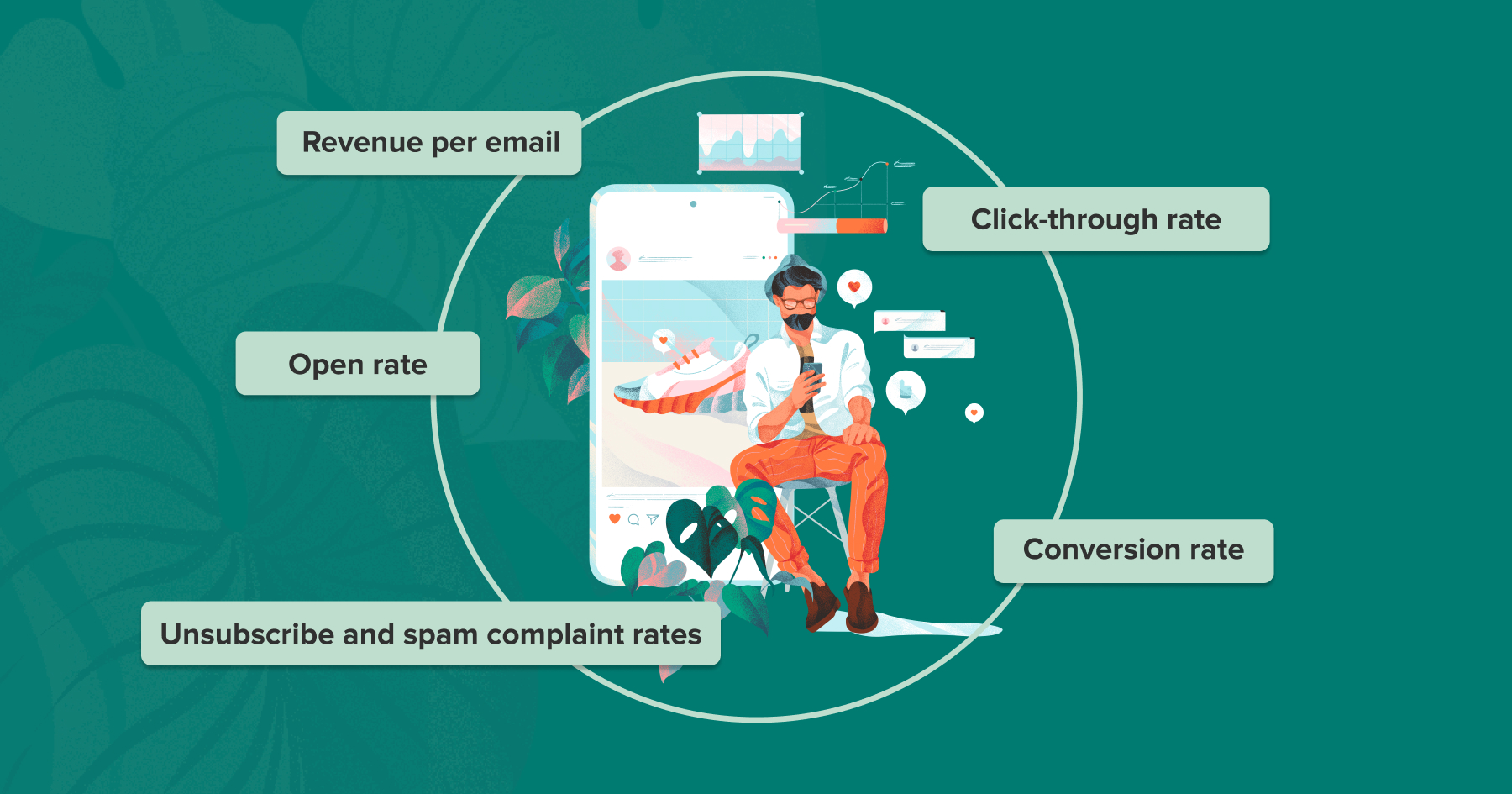
Regular analysis helps to identify what works and what needs adjustment; over time, this leads to stronger performance and more predictable growth.
Common email marketing mistakes startups should avoid
Even with the best intentions, startups often make mistakes that limit their results.
Being aware of the following common mistakes can save time and resources:
- Sending too many emails without clear value: This can lead to unsubscribes and lower engagement.
- Ignoring mobile optimization: This results in a poor user experience for a large portion of the audience.
- Failing to segment the audience: This leads to generic messaging that does not resonate with your subscribers.
- Overlooking list hygiene: This can lead to low deliverability and waste resources sending to people who do not want to receive your emails.
- Relying solely on campaigns without leveraging automation: Automated flows are a major source of revenue and can help drive traffic to your site, improving conversions.
Avoiding these pitfalls creates a stronger foundation for long-term success.
Conclusion
Email marketing remains one of the most effective channels for startup growth in 2026. It offers control, scalability, and a direct way to build lasting relationships with customers. The brands that see consistent results are those that focus on strong fundamentals: list quality, campaign strategy, deliverability and automation.
Startups that invest in thoughtful execution and ongoing optimization are better positioned to grow without relying heavily on unpredictable channels. Every email sent should have a clear purpose and deliver real value to the recipient.
Working with an experienced e-commerce email marketing agency, such as Growth Gurus, can help streamline this process. With deep expertise in automation, segmentation, and performance optimization, Growth Gurus supports startups in building email strategies that drive measurable growth while maintaining strong deliverability.


.jpg)
.jpg)


.jpg)


.jpg)


.png)

A 2026 guide to email marketing for startup growth
Startups face a unique challenge when it comes to marketing. Budgets are tight, competition is intense, and every decision needs to deliver measurable results. Email marketing for startups allows brands to communicate directly with their audience, build trust over time, and drive consistent revenue without relying heavily on paid channels.
In 2026, email marketing is more sophisticated than ever because customer expectations are higher, inbox providers are stricter, and personalization is no longer optional. The startups that succeed are those that combine strategy, technology, and thoughtful messaging. This guide breaks down how to do exactly that while maintaining strong deliverability and long-term growth.
Why email still drives startup growth in 2026
Email remains one of the highest-performing channels for return on investment. According to recent industry data, email marketing generates an average return of $36 for every $1 spent.
For startups, this matters because email:
- Provides a direct line to customers without dependency on algorithms or ad platforms, which can change overnight and affect visibility.
- Supports the entire customer journey, from acquisition and onboarding to retention and repeat purchases, making it a long-term growth driver.
- Allows detailed tracking and segmentation, helping startups understand customer behavior and improve decision-making over time.
7 startup email marketing best practices
Building a high-quality email list from day one
A strong email strategy starts with the right audience. Many startups rush this step and focus on quantity over quality, leading to poor engagement and deliverability issues.
Here is how to build a list that supports sustainable growth:
- Use clear and compelling signup forms: Place forms strategically on your website, product pages, and checkout flow. Offer value in exchange for signups, such as discounts, early access, or useful content.
- Focus on intent-driven subscribers: Refrain from purchasing lists or adding contacts without their explicit permission. Organic growth leads to higher engagement and better sender reputation.
- Segment from the beginning: Capture key information such as preferences or purchase intent. Even basic segmentation helps tailor communication later.
A clean and engaged list is the foundation of effective startup email marketing because it makes it easier to achieve competitive deliverability rates.
Crafting campaigns that people want to open and click
Creating effective email marketing campaigns for startups requires a balance between creativity and clarity. Every email should have a purpose and guide the reader toward a specific action.
Key elements to focus on to improve open and click rates include:
- Subject lines that feel personal and relevant: Avoid overly promotional language and instead, focus on curiosity, value, or urgency that aligns with the audience’s needs.
- Clear and concise messaging: Keep emails easy to scan by using short paragraphs, strong headings, and a single primary call to action.
- Visual design that supports the message: Design should enhance readability, not distract from it. Mobile optimization is essential because many emails are opened on mobile devices.
- Consistency in tone and branding: Build familiarity by maintaining a consistent voice across all brand communications.
- Testing and iteration: Regularly test subject lines, content formats, and send times. Small improvements can lead to significant gains over time.
Understanding deliverability (and why it matters for startups)
Deliverability determines whether your emails reach the inbox or get filtered into spam. In 2026, inbox providers like Gmail and Outlook rely heavily on engagement signals and sender reputation to determine whether your emails reach their users’ inboxes, so it is important to ensure that these metrics are healthy by building effective, relevant and personalised campaigns.
Important factors that influence deliverability include:
- Engagement rates: Opens, clicks, and replies signal that your emails are valuable. Low engagement can harm your reputation.
- List hygiene: Regularly remove inactive subscribers, as sending to unengaged contacts increases the risk of spam complaints.
- Sending consistency: Maintain a predictable sending schedule, because sudden spikes in volume can trigger filters.
- Content quality: Avoid spam-triggering phrases and excessive formatting, and focus on delivering genuine value.
Startups that invest in deliverability early avoid costly issues later, as it is much easier to maintain a strong sender reputation than to rebuild it.
Using automation to scale email marketing efficiently
Automation enables startups to deliver timely, relevant messages without manual effort, and it plays a central role in effective email marketing campaign management.
Essential automated flows to include in your startup’s email marketing strategy include:
- Welcome series: Introduce your brand, set expectations, and guide new subscribers toward their first purchase.
- Abandoned cart reminders: Recover lost revenue by reminding customers of items left in their cart, often with an incentive.
- Post-purchase follow-ups: Strengthen relationships by thanking customers, offering support, and encouraging repeat purchases.
- Re-engagement campaigns: Target inactive subscribers with tailored messages to bring them back.
Browse abandonment emails: Remind users of products they viewed but did not purchase, helping nudge them toward conversion.
Automation ensures that the right message reaches the right person at the right time, which is key to scaling growth.
Personalization that feels natural and relevant in email marketing
Personalization in 2026 involves understanding behavior, preferences, and timing, and applying this knowledge and data across your customer experience to provide a seamless and personalized experience.
Effective personalization strategies for email marketing include:
- Recommending products based on browsing and purchase history.
- Adjusting content based on customer segments, such as new vs returning users.
- Sending emails at times when subscribers are most likely to engage.
- Tailoring offers based on customer lifetime value.
When done well, personalization improves engagement and builds trust. However, when overused or inaccurate, it can feel intrusive; the goal is to make communication feel helpful and timely.
Choosing the right email marketing tools and partners for startups
Technology plays a significant role in scaling email marketing efforts. Many startups use platforms like Klaviyo for their flexibility and advanced features.
Working with a Klaviyo email marketing agency like Growth Gurus can help startups:
- Set up automation flows correctly from the beginning.
- Optimize segmentation and targeting.
- Improve deliverability through best practices.
- Save time by managing campaigns efficiently.
Measuring success and optimizing performance of email marketing
Tracking performance is essential for continuous improvement. Startups should focus on metrics that reflect both engagement and revenue impact.
Key email marketing metrics to monitor for startups:
- Open rate: Indicates how effective your subject lines and sender reputation are.
- Click-through rate: Shows how engaging your content is and how well it drives action.
- Conversion rate: Measures how many recipients complete the desired action, such as making a purchase.
- Revenue per email: Helps understand the financial impact of your campaigns.
Unsubscribe and spam complaint rates: Provides insight into audience satisfaction and content relevance.
Regular analysis helps to identify what works and what needs adjustment; over time, this leads to stronger performance and more predictable growth.
Common email marketing mistakes startups should avoid
Even with the best intentions, startups often make mistakes that limit their results.
Being aware of the following common mistakes can save time and resources:
- Sending too many emails without clear value: This can lead to unsubscribes and lower engagement.
- Ignoring mobile optimization: This results in a poor user experience for a large portion of the audience.
- Failing to segment the audience: This leads to generic messaging that does not resonate with your subscribers.
- Overlooking list hygiene: This can lead to low deliverability and waste resources sending to people who do not want to receive your emails.
- Relying solely on campaigns without leveraging automation: Automated flows are a major source of revenue and can help drive traffic to your site, improving conversions.
Avoiding these pitfalls creates a stronger foundation for long-term success.
Conclusion
Email marketing remains one of the most effective channels for startup growth in 2026. It offers control, scalability, and a direct way to build lasting relationships with customers. The brands that see consistent results are those that focus on strong fundamentals: list quality, campaign strategy, deliverability and automation.
Startups that invest in thoughtful execution and ongoing optimization are better positioned to grow without relying heavily on unpredictable channels. Every email sent should have a clear purpose and deliver real value to the recipient.
Working with an experienced e-commerce email marketing agency, such as Growth Gurus, can help streamline this process. With deep expertise in automation, segmentation, and performance optimization, Growth Gurus supports startups in building email strategies that drive measurable growth while maintaining strong deliverability.
More articles
Ready to grow your business?
If you want your business to experience more sales and faster growth, all you need to do is book a meeting with us today.


