

SMS vs. email marketing: Finding the right fit for your customers

SMS and email marketing are two powerful channels for reaching customers, each with unique strengths. SMS offers immediacy and high engagement, while email provides detailed content and long-term relationship building. This blog explores their differences, benefits, and best practices for integrating both into a successful marketing strategy.
.jpg)
Choosing between SMS and email: which channel suits your audience?
Marketing is the foundation of any growing business. From startups to global ecommerce brands, one challenge unites them all: how to communicate effectively with audiences in a way that drives engagement and maximizes conversions. In today’s digital environment, two channels often rise to the top of the conversation: SMS and email marketing. Each has its strengths, and both can play significant roles in customer outreach. However, a common question lingers: Which channel best fits your customer base and business goals? Is email marketing better than SMS marketing?
Text messaging boasts immediacy and personal feel, capturing your customers’ attention in a space they interact with daily—their phones. At the same time, email marketing stands as a cornerstone of modern communication. Email allows you to share detailed content, nurture leads over time, and maintain a professional presence in inboxes. Both SMS and email excel in distinct ways, and often, the most effective approach is using them together in a well-coordinated strategy.
Statistics further illustrate the impact of these channels. The average email open rate across various industries is around 35.63% while SMS open rates can soar up to 98%. Email helps you share more in-depth content such as newsletters, promotions with multiple product images, and personalized messages that resonate over time. Text messages, by contrast, are often read almost immediately—ideal for limited-time offers, order confirmations, and time-sensitive updates.
When deciding between SMS marketing vs. email marketing, it’s essential to align the channel with your marketing objective and your audience’s preferences. A well-crafted email might be the ideal format for a long-form product announcement, while a quick SMS alert is perfect for timely updates like “Flash Sale ends tonight!” Rather than thinking of these two approaches as competitors, it’s often more effective to see them as complementary tools that can work simultaneously.
This blog will explore the ins and outs of text and email marketing, highlighting their differences, strengths, and potential pitfalls.
Understanding text and email marketing
Text and email marketing are two foundational channels for reaching a wide range of audiences in the digital age. Each has its defining characteristics, advantages, and ideal use cases. Text marketing, commonly referred to as SMS marketing, involves sending short, concise messages to customers’ mobile devices. Email marketing, by contrast, lets you create structured, long-form content that can include images, links, and detailed information.
One major appeal of text marketing is its directness. Most people keep their phones within arm’s reach at all times. A text message arrives, and the notification prompts immediate attention. This high visibility can result in improved engagement rates, making SMS an attractive channel for time-sensitive alerts, flash sales, or quick reminders. Yet, the conciseness of text messages can be limiting if you need to convey more complex information.
Email marketing, on the other hand, offers more space to elaborate. You can share product demos, multiple calls to action, and comprehensive updates. Email also allows for advanced design elements. You can embed images, use HTML layouts, and employ personalization tokens to cater content to each subscriber’s interests. While emails typically have lower immediate open rates compared to texts, they foster deeper brand storytelling and relationship-building over time.
Both channels serve as highly measurable methods of communication. You can track key metrics like open rates, click rates, and conversions. By analyzing performance data, you get valuable insights to optimize your campaigns for better results. In many cases, businesses find value in using both SMS and email as part of a cohesive marketing plan. Understanding how each channel functions and when to use them is the cornerstone of a successful strategy.
Key differences between SMS and email marketing
Still wondering which is better: email or text message? There are many factors to consider. For example, which often better leads and engagement? While both deliver messages, their formats, audience expectations, and potential outcomes are not the same. Let’s explore the major distinctions to help you make informed decisions about the best use of each channel.
Open rates
Open rates—how many recipients actually view your message—are a critical metric in marketing. They help you gauge initial interest and show whether your efforts are resonating with your audience. SMS messages have a high open rate, making them an effective way to get your message seen quickly. People generally pay more immediate attention to their text messages, especially when push notifications are enabled.
Email open rates vary considerably by industry, but are generally lower compared to SMS. Yet, an email’s more flexible format lets you deliver in-depth content, build brand identity, and include embedded links or detailed visuals. Additionally, open rates for emails can be positively influenced by strong subject lines, personalization, and segmentation strategies.
The difference in open rates has to do with how each channel is consumed. Texts arrive in a single messaging inbox and often trigger immediate push notifications, while emails might land in crowded inboxes. With that said, an email that lands in the promotions folder is not doomed to be ignored if you invest in best practices such as segmenting your list and crafting compelling subject lines.
Message length
When planning a campaign, it’s essential to consider how much detail you need to convey. SMS messages, typically capped at 160 characters per segment, require absolute short, clear and concise messages. This constraint makes it perfect for short announcements, like a quick flash sale or a confirmation code. You can employ concise calls to action—“Shop now,” “Redeem offer”—to drive immediate responses.
Email marketing, however, allows for much more detail. You can include longer text, multiple images, and formatted layouts. This approach is invaluable for newsletters, product showcases, and educational content that fosters a deeper connection with readers. A well-crafted email might include product descriptions, customer success stories, embedded videos, or multiple calls to action tailored to different segments of your audience.
Both approaches have value, so your choice often depends on your message’s complexity. If you need to share step-by-step information or multiple updates at once, email might be the best fit. If your goal is to encourage immediate action for an offer, text is likely the better route.
Engagement rate
Engagement rate goes beyond opening the message. It measures whether recipients take action, such as clicking a link or replying. High open rates for text often translate into quick responses, with some studies showing SMS click-through rates can be significantly higher than email. Text messages can achieve response rates of up to 45% in certain promotional campaigns.
Email marketing’s engagement, while lower in immediate response, offers longer-term interaction potential. Subscribers may open an email multiple times, forward it to friends, or save it for future reference. Click-through rates vary by industry and campaign, but applying personalization tactics can boost overall engagement. A targeted email that addresses each subscriber’s name and preferences can drive repeated interaction, making email an excellent tool for relationship-building and ongoing brand awareness.
Deciding which channel leads to higher engagement often depends on campaign goals. For urgent promotions or flash deals, an SMS can rapidly spark action. For sustained engagement, detailed storytelling, and continued brand exposure, email remains a tried-and-true method.
Subscriber experience
How subscribers experience your messages plays a major role in shaping their perception of your brand. SMS messages pop up in personal messaging apps, appearing alongside texts from friends and family. This more intimate channel demands you respect boundaries. Overuse can lead to annoyance or unsubscribes.
Email inboxes, while also personal, are considered more transactional and organizational in nature. Recipients often expect brands to appear there. Because of spam filters and promotional tabs, an email might not always land in the primary inbox, but it is still viewed as a standard method for brand communication. Emails give recipients more flexibility in choosing when and how to read them, which can create a less intrusive experience compared to SMS.
Both SMS and email can improve subscriber experience if managed properly. Quick opt-outs, relevant content, and mindful frequency are cornerstones of building trust. The moment subscribers feel spammed or irrelevant content floods their devices, they may unsubscribe or even block future communications.
Cost-effectiveness
Budget considerations are always at the forefront of marketing decisions. Text marketing typically operates on a pay-per-message or bundle basis. The cost depends on the volume of texts and sometimes the region you’re sending them to. Though each individual SMS might be cost-effective, sending large volumes—especially internationally—can become pricey.
Email marketing platforms usually charge based on the size of your subscriber list or the number of emails you send each month. While costs can scale up for large lists, the potential reach per dollar can be substantial. Emails can also accommodate more comprehensive content, which may mean fewer individual sends are needed to deliver important updates or promotions.
Balancing the costs of SMS and email calls for a clear understanding of your campaign objectives and target audience size. For urgent, high-impact messages, SMS might be worth the cost. Meanwhile, email marketing can serve as a more budget-friendly approach for regular, in-depth communications with a broad audience.
Regulations and compliance
Both SMS and email channels are subject to regulations aimed at protecting consumer privacy and curbing spam. In the United States, SMS marketing must comply with rules laid out by the Telephone Consumer Protection Act (TCPA). This law requires businesses to obtain explicit consent before sending automated text messages. Violation can lead to substantial fines.
Email marketing is regulated primarily by the CAN-SPAM Act in the United States, which mandates clear opt-out options, truthful subject lines, and transparent sender information. Internationally, the General Data Protection Regulation (GDPR) in the European Union impacts how businesses handle email subscriber data, requiring explicit consent and data protection measures.
Staying compliant is essential not only to avoid penalties but also to build a trustworthy relationship with your audience. Clear opt-in processes, straightforward unsubscribe links, and transparent privacy policies go a long way in safeguarding your brand’s reputation.
Security concerns
Security is paramount in any digital channel, and SMS and email each face unique vulnerabilities. Text messages can be intercepted or spoofed if the recipient’s phone or carrier has poor security measures. Phishing scams, while more common in email, also occur via SMS. These issues highlight the importance of educating your audience about verifying message authenticity.
Email is a frequent target of phishing and hacking attempts. Attackers may disguise emails to look like they come from legitimate businesses, luring recipients to click malicious links. Marketers must implement strong anti-phishing protocols, regularly update email security tools, and encourage subscribers to check sender details before interacting with any links.
Encryption and two-factor authentication can bolster security for both channels. By employing secure marketing platforms and prioritizing user education, businesses can mitigate risks. Ultimately, a commitment to best security practices protects both the brand and its subscribers.
Consumer preferences
Consumer behavior plays a crucial role in determining how successful each channel can be. Some demographics, particularly younger consumers, might prefer the quickness of SMS communication. Others may view text alerts as intrusive and prefer receiving brand communications by email. Preferences also depend on the context. If you’re sending a flight status update, a text is often appreciated. If you’re emailing a loyalty program newsletter, recipients might prefer the more comprehensive format of email.
Recent trends indicate that consumers appreciate choice. They want to opt into the channels that suit them best. A survey found that 9 out of 10 consumers would like to use messaging to interact with brands. However, when it comes to in-depth content, email remains a preferred channel. The key is understanding your audience segments through data analysis. Let your subscribers decide which channel they want to hear from you on, and tailor your marketing strategy accordingly.
Marketing and promotional messages
Promotional messages aim to drive sales, showcase product offerings, and entice customers to take immediate action. SMS is typically used for time-sensitive promotions. Sending a text about a special discount that expires at midnight can encourage impulse buys. Messages can link directly to a product page, making it easy for recipients to jump straight into a purchase.
Email marketing, meanwhile, supports more extensive promotional content. A single email can feature multiple products, highlight various discount tiers, and include customer reviews or how-to videos. If you have a large collection or a detailed set of offers, email is a robust choice. It allows you to break down promotions and provide the context or proof points that motivate customers to buy.
One strategy is to use SMS for short-term promotions and email for ongoing brand-building promotions. This way, you reach your audience on two fronts. By maintaining consistent branding across both channels, you reinforce your messaging and improve overall campaign effectiveness.
Transactional communication
Transactional messages are the updates and confirmations triggered by specific customer actions, like an order shipment notification or appointment reminder. In these situations, clarity and reliability are essential. SMS works well for immediate updates—recipients can see right away that their package has shipped, or they have a pending appointment.
Email also plays a vital role in transactional messaging, particularly for messages requiring more detail. Shipping confirmations with tracking links, invoice receipts, or account statements are typically sent via email so customers can reference them later. Automated triggers in email marketing platforms help ensure these notifications are both timely and accurate.
Offering transactional notifications via SMS and email gives customers the option to stay informed in the way they prefer. Some businesses ask for both phone numbers and email addresses during checkout, allowing them to deliver important messages across channels. Balancing these notifications ensures a smooth experience while preventing information overload.
Benefits of combining SMS and email marketing
Using both SMS and email is often the best way to capitalize on each channel’s unique strengths. By creating a cohesive, multi-channel strategy, you cater to your audience’s varied preferences while boosting your potential reach. Below are some key advantages of integrating SMS and email into one comprehensive marketing plan.
Improved customer engagement
A multi-channel approach increases your opportunities to engage with subscribers. People who might ignore an email could respond to a text—and vice versa. By timing your messages effectively, you can send a quick SMS reminder about a flash sale that was initially promoted in an email newsletter. This synergy helps ensure your campaign doesn’t get lost in the noise.
Additionally, sending consistent messaging across both channels can increase brand recognition. When customers see your promotions or updates in different formats, it reinforces your message. The result is often higher engagement rates and a stronger connection to your brand.
Optimized customer experiences
Personalization is more than just inserting a customer’s first name. It’s about delivering relevant content that aligns with individual interests, purchase history, or browsing behavior. Email is well-suited for deep personalization because you can insert dynamic content blocks based on user preferences. You might feature products similar to the ones a user has browsed or purchased in the past.
SMS can also employ personalization, albeit in a shorter format. A text might address a customer by name and reference a recent purchase—“Hi [Name], we thought you might like 20% off the matching accessories you viewed!” By blending these two channels, you can create a more holistic approach to personalization. If a customer consistently clicks on certain types of items in an email, follow up with an SMS discount that focuses on that product category.
Higher conversion rates
Pairing SMS and email can significantly boost conversions. Emails serve as a platform for more detailed product presentations, embedded videos, and compelling visuals that intrigue recipients. Once they’ve shown interest, a targeted SMS can encourage them to take the final step—making a purchase. According to the report, using SMS alongside email can increase conversion rates by up to 47.7%.
The immediacy of SMS can re-engage customers who are already aware of your offer. For example, if you see that an email recipient clicked through to your online store but didn’t complete the purchase, you can send a short “We noticed you left an item in your cart” text. This combination of detailed email marketing and timely text follow-up can push hesitant buyers over the line.
Increased customer retention
Retaining existing customers often costs less than acquiring new ones. By offering valuable, consistent communications across SMS and email, you encourage loyalty. An integrated approach could include periodic newsletters delivered via email, supplemented by special VIP-only text messages for your most engaged customers.
You can also use segmentation to tailor retention strategies. Loyal customers might appreciate receiving exclusive deals via text, while occasional buyers could use periodic email reminders about new products. Providing multiple channels for customer support, such as text-based questions or email-based support tickets, can also foster more positive experiences, further increasing retention.
Better campaign tracking and optimization
Each channel comes with its own set of metrics. Email marketing platforms let you monitor open rates, click-through rates, bounce rates, and unsubscribes. SMS platforms provide data on delivery rates, open rates (when feasible), and click-throughs. By integrating these data points, you can assess which channel drives the most conversions, how different segments respond, and which messages resonate best.
A/B testing becomes more powerful when done across multiple channels. You might test different subject lines in email campaigns and different calls to action in SMS. By analyzing combined outcomes, you get a richer picture of subscriber behavior, allowing you to refine both short-term tactics and long-term strategies.
Broader reach
Every customer is unique in how they prefer to interact with brands. Some may rarely check their email but always respond to texts. Others could be the opposite. By offering both channels, you meet customers where they are most comfortable. This inclusive approach allows you to capture the widest possible audience.
There are also moments when people have limited internet access but can still receive text messages. For example, customers traveling or in areas with spotty Wi-Fi might not see your emails until later, but an SMS can still get through. Ensuring you have coverage on both fronts means fewer missed communication opportunities.
Strengthened customer journey
From awareness to consideration to decision, the customer journey is rarely linear. People might first learn about your brand from a social media ad, sign up for your email list, then engage with a text promotion. Providing consistent messaging across these different touchpoints helps nurture leads more effectively.
Emails can guide prospects through a nurturing sequence, educating them on your brand’s story and product benefits. When they’re on the verge of purchase, a timely SMS can provide that final nudge. Meanwhile, ongoing email newsletters can keep them informed about future updates. Integrating both channels ensures you’re present at every stage of the journey, creating a seamless experience that boosts satisfaction and loyalty.
Best practices for SMS and email integration
While combining SMS and email can unlock a host of benefits, it’s crucial to follow best practices that ensure your strategy remains effective and respectful of subscriber preferences. Below are guidelines to help you get the most out of both channels.
Align messaging and objectives
Start by defining the purpose of each message. Is the goal to inform, to persuade, or to remind? Once you have clarity on your objective, pick the channel that best serves it—or use both in a complementary way. For instance, a detailed product launch might go out via email, while a concise SMS alerts subscribers to check their inbox for more info.
When aligning objectives, also consider timing. If your aim is to push immediate sales of a newly launched product, pair an email announcement with a follow-up text reminder after a set interval. Ensure both messages reinforce the same core message to avoid confusion.
Segment your audience effectively
Segmentation is key to relevance. Divide your audience based on factors like purchase history, engagement level, demographics, or browsing behavior. For example, you can send one SMS campaign to your VIP customers offering early access to sales, while another group receives a different perk via email.
If you notice that a certain segment rarely opens emails, try reaching them via text. Conversely, if some subscribers show a strong aversion to SMS, focus on email for them. Tailoring channel usage based on your segments not only improves engagement but also respects user preferences.
Maintain consistent branding and voice
A unified brand identity across SMS and email helps subscribers instantly recognize your messages. Use consistent language style, color schemes (in email), and brand elements such as logos. The tone should match your brand’s overall personality—whether it’s friendly, professional, playful, or formal.
While SMS character limits can restrict creativity, a short brand sign-off or a brief tagline can still make your messages recognizable. In emails, take advantage of layouts, images, and formatting that reflect your brand’s look and feel. Consistency fosters trust, which is essential for sustained success in both channels.
Utilize automation and integration tools
Automation is a powerful way to connect SMS and email efforts. Many marketing platforms now offer built-in workflows that trigger an SMS after an email is opened or a specific link is clicked. This kind of behavior-based marketing helps you reach subscribers at the exact moment they’re most engaged.
Integration tools let you manage both channels from a single dashboard. By consolidating your data, you can track performance more efficiently and avoid the pitfalls of siloed information. Automated workflows also ensure that no time is wasted, delivering messages precisely when and where they are most likely to make an impact.
Personalize content for each channel
While both channels support personalization, they do so in different ways. Email’s longer format lets you add dynamic content blocks, recommended products, or user-specific images. SMS can incorporate brief personalized details like first names or localized offers.
Aim to match the personalization approach with the medium. For SMS, keep it concise—“Hi {Name}, enjoy 15% off just for you!” In email, go deeper by including product carousels or localized event invitations. This channel-appropriate personalization makes subscribers feel valued and increases the likelihood of a positive response.
Monitor performance and analyze results
One of the advantages of digital marketing is the ability to collect real-time performance data. Keep tabs on open rates, click-through rates, and conversions for both SMS and email. Look for patterns—maybe your Sunday afternoon emails perform better than your Tuesday morning texts. Use these insights to refine your timing and messaging.
Tracking unsubscribe rates is also essential. If you notice a spike in opt-outs following a particular campaign, evaluate what might have gone wrong. Perhaps the frequency was too high, or the content irrelevant to that segment. Continuous performance analysis allows you to adjust strategies before any missteps become costly.
Provide clear opt-in and opt-out options
Privacy and control are cornerstones of modern marketing ethics. Always obtain explicit consent before sending marketing texts, as required by regulations like the TCPA. For email, maintain transparent sign-up forms and provide easy unsubscribe links in every message, as stipulated by laws such as CAN-SPAM and GDPR.
When using both SMS and email, consider separate opt-ins. Some subscribers may only want email updates, while others prefer both channels. Make it simple for people to tailor their preferences so they feel empowered and respected. This approach also helps maintain high deliverability rates and reduces the risk of spam complaints.
Test and optimize campaigns
A/B testing is an ongoing process for determining what resonates best with your audience. You can test subject lines, send times, or promotional offers. For SMS, experiment with different call-to-action phrases or shortened URLs. Track which versions drive higher engagement or conversions, then use that feedback to refine future campaigns.
Testing is especially critical when integrating two channels. For instance, you might test whether sending an SMS reminder 24 hours after an email leads to more conversions compared to sending it two days later. Data-driven optimization ensures your SMS and email efforts continuously improve.
Optimize customer interactions
Ultimately, both SMS and email campaigns should deliver value to subscribers. Whether it’s exclusive deals, useful information, or personalized insights, the content should make people feel glad they chose to hear from you. Always strive to keep messages relevant, timely, and helpful.
When in doubt, consider how you would feel if you were on the receiving end of the campaign. Is the frequency bearable? Is the content intriguing? A mindset that prioritizes the customer experience helps you create authentic connections, laying the groundwork for long-term brand loyalty and higher sales.
Top SMS and email marketing platforms
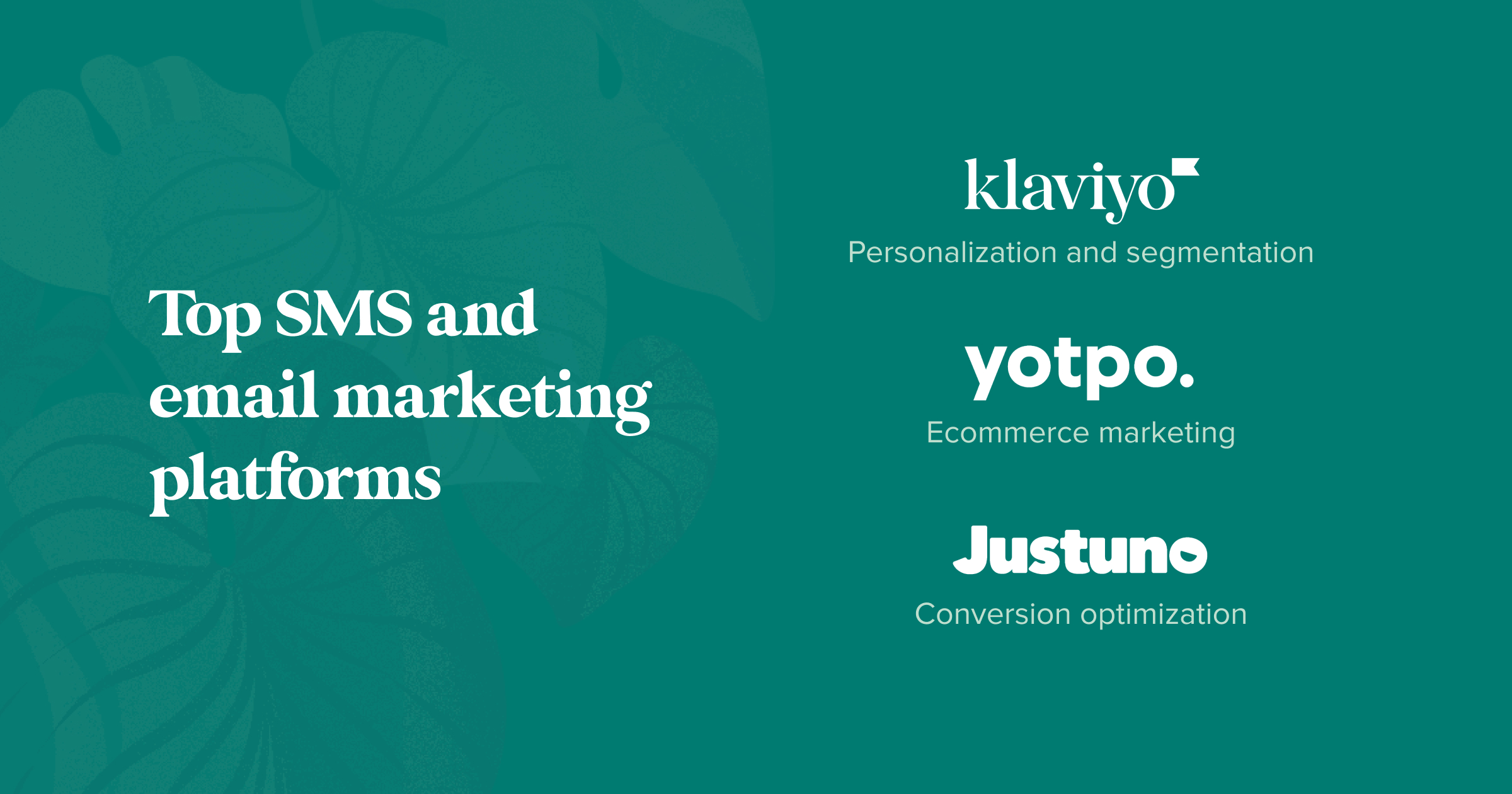
Choosing the right platform can simplify how you deploy, measure, and optimize both SMS and email campaigns. While there are many options available, the following three are known for robust features, user-friendly interfaces, and seamless integration capabilities.
Klaviyo
Klaviyo specializes in data-driven marketing automation. The platform integrates with popular e-commerce systems, allowing you to track customer behaviors such as browsing and purchase history. You can then use this data to build targeted segments for both email and SMS.
One standout feature is its comprehensive analytics. Klaviyo’s dashboard offers insights into open rates, revenue generated per campaign, and even predicted lifetime value for your segments. This enables you to adjust strategies on the fly. With robust A/B testing, you can optimize subject lines and texts, ensuring your campaigns stay effective.
Justuno
Justuno focuses on conversion optimization, offering a suite of tools that include pop-ups, banners, and personalization features. By capturing leads through on-site displays, you can expand lists more effectively. Justuno’s targeting options let you show specific offers based on user behavior, location, or referral source.
Integration with email service providers and SMS platforms helps you seamlessly transition leads into nurturing sequences. For example, a visitor who signs up via a Justuno pop-up can automatically receive an email welcome series, followed by an SMS offer. The platform’s real-time analytics help you measure how well different on-site promotions are converting, guiding better optimization decisions.
Yotpo
Yotpo is well-known for its focus on user-generated content such as reviews, ratings, and social proof. It also provides robust marketing capabilities for both email and SMS. You can collect reviews automatically and leverage that feedback in campaigns to boost credibility.
For SMS, Yotpo allows you to segment customers based on their purchase history or behavior, then send tailored text messages that link to product pages or exclusive deals. With email, you can integrate reviews and social proof into newsletters or promotional campaigns, showcasing real customer experiences. By aligning these strategies, you create a persuasive marketing ecosystem that builds trust and drives conversions.
Conclusion
Finding the right marketing channel to connect with your customers doesn’t have to be an either-or decision. When you explore sms vs email marketing, each channel offers unique advantages—SMS shines in immediacy and high open rates, while email excels in providing depth, detail, and a lasting digital footprint. In many scenarios, a blended approach yields the most effective results, tapping into the power of concise text alerts and informative email campaigns to guide subscribers through every stage of the customer journey.
By understanding the both channels, you can tailor your strategy to best suit your audience. If you’re looking to supercharge your outreach, we at Growth Gurus can help. Our e-commerce marketing agency specializes in crafting highly targeted email strategies that boost your brand’s reach. Harnessing marketing automation technology to connect brands with the right audience at the right time, delivering campaigns that engage, nurture, and convert. Reach out to us when you’re ready to improve your marketing efforts and experience the impact of a well-structured, data-driven approach.
.jpg)
.jpg)
.jpg)
.jpg)
.jpg)


.jpg)
.jpg)


.jpg)


.jpg)


.png)

Choosing between SMS and email: which channel suits your audience?
Marketing is the foundation of any growing business. From startups to global ecommerce brands, one challenge unites them all: how to communicate effectively with audiences in a way that drives engagement and maximizes conversions. In today’s digital environment, two channels often rise to the top of the conversation: SMS and email marketing. Each has its strengths, and both can play significant roles in customer outreach. However, a common question lingers: Which channel best fits your customer base and business goals? Is email marketing better than SMS marketing?
Text messaging boasts immediacy and personal feel, capturing your customers’ attention in a space they interact with daily—their phones. At the same time, email marketing stands as a cornerstone of modern communication. Email allows you to share detailed content, nurture leads over time, and maintain a professional presence in inboxes. Both SMS and email excel in distinct ways, and often, the most effective approach is using them together in a well-coordinated strategy.
Statistics further illustrate the impact of these channels. The average email open rate across various industries is around 35.63% while SMS open rates can soar up to 98%. Email helps you share more in-depth content such as newsletters, promotions with multiple product images, and personalized messages that resonate over time. Text messages, by contrast, are often read almost immediately—ideal for limited-time offers, order confirmations, and time-sensitive updates.
When deciding between SMS marketing vs. email marketing, it’s essential to align the channel with your marketing objective and your audience’s preferences. A well-crafted email might be the ideal format for a long-form product announcement, while a quick SMS alert is perfect for timely updates like “Flash Sale ends tonight!” Rather than thinking of these two approaches as competitors, it’s often more effective to see them as complementary tools that can work simultaneously.
This blog will explore the ins and outs of text and email marketing, highlighting their differences, strengths, and potential pitfalls.
Understanding text and email marketing
Text and email marketing are two foundational channels for reaching a wide range of audiences in the digital age. Each has its defining characteristics, advantages, and ideal use cases. Text marketing, commonly referred to as SMS marketing, involves sending short, concise messages to customers’ mobile devices. Email marketing, by contrast, lets you create structured, long-form content that can include images, links, and detailed information.
One major appeal of text marketing is its directness. Most people keep their phones within arm’s reach at all times. A text message arrives, and the notification prompts immediate attention. This high visibility can result in improved engagement rates, making SMS an attractive channel for time-sensitive alerts, flash sales, or quick reminders. Yet, the conciseness of text messages can be limiting if you need to convey more complex information.
Email marketing, on the other hand, offers more space to elaborate. You can share product demos, multiple calls to action, and comprehensive updates. Email also allows for advanced design elements. You can embed images, use HTML layouts, and employ personalization tokens to cater content to each subscriber’s interests. While emails typically have lower immediate open rates compared to texts, they foster deeper brand storytelling and relationship-building over time.
Both channels serve as highly measurable methods of communication. You can track key metrics like open rates, click rates, and conversions. By analyzing performance data, you get valuable insights to optimize your campaigns for better results. In many cases, businesses find value in using both SMS and email as part of a cohesive marketing plan. Understanding how each channel functions and when to use them is the cornerstone of a successful strategy.
Key differences between SMS and email marketing
Still wondering which is better: email or text message? There are many factors to consider. For example, which often better leads and engagement? While both deliver messages, their formats, audience expectations, and potential outcomes are not the same. Let’s explore the major distinctions to help you make informed decisions about the best use of each channel.
Open rates
Open rates—how many recipients actually view your message—are a critical metric in marketing. They help you gauge initial interest and show whether your efforts are resonating with your audience. SMS messages have a high open rate, making them an effective way to get your message seen quickly. People generally pay more immediate attention to their text messages, especially when push notifications are enabled.
Email open rates vary considerably by industry, but are generally lower compared to SMS. Yet, an email’s more flexible format lets you deliver in-depth content, build brand identity, and include embedded links or detailed visuals. Additionally, open rates for emails can be positively influenced by strong subject lines, personalization, and segmentation strategies.
The difference in open rates has to do with how each channel is consumed. Texts arrive in a single messaging inbox and often trigger immediate push notifications, while emails might land in crowded inboxes. With that said, an email that lands in the promotions folder is not doomed to be ignored if you invest in best practices such as segmenting your list and crafting compelling subject lines.
Message length
When planning a campaign, it’s essential to consider how much detail you need to convey. SMS messages, typically capped at 160 characters per segment, require absolute short, clear and concise messages. This constraint makes it perfect for short announcements, like a quick flash sale or a confirmation code. You can employ concise calls to action—“Shop now,” “Redeem offer”—to drive immediate responses.
Email marketing, however, allows for much more detail. You can include longer text, multiple images, and formatted layouts. This approach is invaluable for newsletters, product showcases, and educational content that fosters a deeper connection with readers. A well-crafted email might include product descriptions, customer success stories, embedded videos, or multiple calls to action tailored to different segments of your audience.
Both approaches have value, so your choice often depends on your message’s complexity. If you need to share step-by-step information or multiple updates at once, email might be the best fit. If your goal is to encourage immediate action for an offer, text is likely the better route.
Engagement rate
Engagement rate goes beyond opening the message. It measures whether recipients take action, such as clicking a link or replying. High open rates for text often translate into quick responses, with some studies showing SMS click-through rates can be significantly higher than email. Text messages can achieve response rates of up to 45% in certain promotional campaigns.
Email marketing’s engagement, while lower in immediate response, offers longer-term interaction potential. Subscribers may open an email multiple times, forward it to friends, or save it for future reference. Click-through rates vary by industry and campaign, but applying personalization tactics can boost overall engagement. A targeted email that addresses each subscriber’s name and preferences can drive repeated interaction, making email an excellent tool for relationship-building and ongoing brand awareness.
Deciding which channel leads to higher engagement often depends on campaign goals. For urgent promotions or flash deals, an SMS can rapidly spark action. For sustained engagement, detailed storytelling, and continued brand exposure, email remains a tried-and-true method.
Subscriber experience
How subscribers experience your messages plays a major role in shaping their perception of your brand. SMS messages pop up in personal messaging apps, appearing alongside texts from friends and family. This more intimate channel demands you respect boundaries. Overuse can lead to annoyance or unsubscribes.
Email inboxes, while also personal, are considered more transactional and organizational in nature. Recipients often expect brands to appear there. Because of spam filters and promotional tabs, an email might not always land in the primary inbox, but it is still viewed as a standard method for brand communication. Emails give recipients more flexibility in choosing when and how to read them, which can create a less intrusive experience compared to SMS.
Both SMS and email can improve subscriber experience if managed properly. Quick opt-outs, relevant content, and mindful frequency are cornerstones of building trust. The moment subscribers feel spammed or irrelevant content floods their devices, they may unsubscribe or even block future communications.
Cost-effectiveness
Budget considerations are always at the forefront of marketing decisions. Text marketing typically operates on a pay-per-message or bundle basis. The cost depends on the volume of texts and sometimes the region you’re sending them to. Though each individual SMS might be cost-effective, sending large volumes—especially internationally—can become pricey.
Email marketing platforms usually charge based on the size of your subscriber list or the number of emails you send each month. While costs can scale up for large lists, the potential reach per dollar can be substantial. Emails can also accommodate more comprehensive content, which may mean fewer individual sends are needed to deliver important updates or promotions.
Balancing the costs of SMS and email calls for a clear understanding of your campaign objectives and target audience size. For urgent, high-impact messages, SMS might be worth the cost. Meanwhile, email marketing can serve as a more budget-friendly approach for regular, in-depth communications with a broad audience.
Regulations and compliance
Both SMS and email channels are subject to regulations aimed at protecting consumer privacy and curbing spam. In the United States, SMS marketing must comply with rules laid out by the Telephone Consumer Protection Act (TCPA). This law requires businesses to obtain explicit consent before sending automated text messages. Violation can lead to substantial fines.
Email marketing is regulated primarily by the CAN-SPAM Act in the United States, which mandates clear opt-out options, truthful subject lines, and transparent sender information. Internationally, the General Data Protection Regulation (GDPR) in the European Union impacts how businesses handle email subscriber data, requiring explicit consent and data protection measures.
Staying compliant is essential not only to avoid penalties but also to build a trustworthy relationship with your audience. Clear opt-in processes, straightforward unsubscribe links, and transparent privacy policies go a long way in safeguarding your brand’s reputation.
Security concerns
Security is paramount in any digital channel, and SMS and email each face unique vulnerabilities. Text messages can be intercepted or spoofed if the recipient’s phone or carrier has poor security measures. Phishing scams, while more common in email, also occur via SMS. These issues highlight the importance of educating your audience about verifying message authenticity.
Email is a frequent target of phishing and hacking attempts. Attackers may disguise emails to look like they come from legitimate businesses, luring recipients to click malicious links. Marketers must implement strong anti-phishing protocols, regularly update email security tools, and encourage subscribers to check sender details before interacting with any links.
Encryption and two-factor authentication can bolster security for both channels. By employing secure marketing platforms and prioritizing user education, businesses can mitigate risks. Ultimately, a commitment to best security practices protects both the brand and its subscribers.
Consumer preferences
Consumer behavior plays a crucial role in determining how successful each channel can be. Some demographics, particularly younger consumers, might prefer the quickness of SMS communication. Others may view text alerts as intrusive and prefer receiving brand communications by email. Preferences also depend on the context. If you’re sending a flight status update, a text is often appreciated. If you’re emailing a loyalty program newsletter, recipients might prefer the more comprehensive format of email.
Recent trends indicate that consumers appreciate choice. They want to opt into the channels that suit them best. A survey found that 9 out of 10 consumers would like to use messaging to interact with brands. However, when it comes to in-depth content, email remains a preferred channel. The key is understanding your audience segments through data analysis. Let your subscribers decide which channel they want to hear from you on, and tailor your marketing strategy accordingly.
Marketing and promotional messages
Promotional messages aim to drive sales, showcase product offerings, and entice customers to take immediate action. SMS is typically used for time-sensitive promotions. Sending a text about a special discount that expires at midnight can encourage impulse buys. Messages can link directly to a product page, making it easy for recipients to jump straight into a purchase.
Email marketing, meanwhile, supports more extensive promotional content. A single email can feature multiple products, highlight various discount tiers, and include customer reviews or how-to videos. If you have a large collection or a detailed set of offers, email is a robust choice. It allows you to break down promotions and provide the context or proof points that motivate customers to buy.
One strategy is to use SMS for short-term promotions and email for ongoing brand-building promotions. This way, you reach your audience on two fronts. By maintaining consistent branding across both channels, you reinforce your messaging and improve overall campaign effectiveness.
Transactional communication
Transactional messages are the updates and confirmations triggered by specific customer actions, like an order shipment notification or appointment reminder. In these situations, clarity and reliability are essential. SMS works well for immediate updates—recipients can see right away that their package has shipped, or they have a pending appointment.
Email also plays a vital role in transactional messaging, particularly for messages requiring more detail. Shipping confirmations with tracking links, invoice receipts, or account statements are typically sent via email so customers can reference them later. Automated triggers in email marketing platforms help ensure these notifications are both timely and accurate.
Offering transactional notifications via SMS and email gives customers the option to stay informed in the way they prefer. Some businesses ask for both phone numbers and email addresses during checkout, allowing them to deliver important messages across channels. Balancing these notifications ensures a smooth experience while preventing information overload.
Benefits of combining SMS and email marketing
Using both SMS and email is often the best way to capitalize on each channel’s unique strengths. By creating a cohesive, multi-channel strategy, you cater to your audience’s varied preferences while boosting your potential reach. Below are some key advantages of integrating SMS and email into one comprehensive marketing plan.
Improved customer engagement
A multi-channel approach increases your opportunities to engage with subscribers. People who might ignore an email could respond to a text—and vice versa. By timing your messages effectively, you can send a quick SMS reminder about a flash sale that was initially promoted in an email newsletter. This synergy helps ensure your campaign doesn’t get lost in the noise.
Additionally, sending consistent messaging across both channels can increase brand recognition. When customers see your promotions or updates in different formats, it reinforces your message. The result is often higher engagement rates and a stronger connection to your brand.
Optimized customer experiences
Personalization is more than just inserting a customer’s first name. It’s about delivering relevant content that aligns with individual interests, purchase history, or browsing behavior. Email is well-suited for deep personalization because you can insert dynamic content blocks based on user preferences. You might feature products similar to the ones a user has browsed or purchased in the past.
SMS can also employ personalization, albeit in a shorter format. A text might address a customer by name and reference a recent purchase—“Hi [Name], we thought you might like 20% off the matching accessories you viewed!” By blending these two channels, you can create a more holistic approach to personalization. If a customer consistently clicks on certain types of items in an email, follow up with an SMS discount that focuses on that product category.
Higher conversion rates
Pairing SMS and email can significantly boost conversions. Emails serve as a platform for more detailed product presentations, embedded videos, and compelling visuals that intrigue recipients. Once they’ve shown interest, a targeted SMS can encourage them to take the final step—making a purchase. According to the report, using SMS alongside email can increase conversion rates by up to 47.7%.
The immediacy of SMS can re-engage customers who are already aware of your offer. For example, if you see that an email recipient clicked through to your online store but didn’t complete the purchase, you can send a short “We noticed you left an item in your cart” text. This combination of detailed email marketing and timely text follow-up can push hesitant buyers over the line.
Increased customer retention
Retaining existing customers often costs less than acquiring new ones. By offering valuable, consistent communications across SMS and email, you encourage loyalty. An integrated approach could include periodic newsletters delivered via email, supplemented by special VIP-only text messages for your most engaged customers.
You can also use segmentation to tailor retention strategies. Loyal customers might appreciate receiving exclusive deals via text, while occasional buyers could use periodic email reminders about new products. Providing multiple channels for customer support, such as text-based questions or email-based support tickets, can also foster more positive experiences, further increasing retention.
Better campaign tracking and optimization
Each channel comes with its own set of metrics. Email marketing platforms let you monitor open rates, click-through rates, bounce rates, and unsubscribes. SMS platforms provide data on delivery rates, open rates (when feasible), and click-throughs. By integrating these data points, you can assess which channel drives the most conversions, how different segments respond, and which messages resonate best.
A/B testing becomes more powerful when done across multiple channels. You might test different subject lines in email campaigns and different calls to action in SMS. By analyzing combined outcomes, you get a richer picture of subscriber behavior, allowing you to refine both short-term tactics and long-term strategies.
Broader reach
Every customer is unique in how they prefer to interact with brands. Some may rarely check their email but always respond to texts. Others could be the opposite. By offering both channels, you meet customers where they are most comfortable. This inclusive approach allows you to capture the widest possible audience.
There are also moments when people have limited internet access but can still receive text messages. For example, customers traveling or in areas with spotty Wi-Fi might not see your emails until later, but an SMS can still get through. Ensuring you have coverage on both fronts means fewer missed communication opportunities.
Strengthened customer journey
From awareness to consideration to decision, the customer journey is rarely linear. People might first learn about your brand from a social media ad, sign up for your email list, then engage with a text promotion. Providing consistent messaging across these different touchpoints helps nurture leads more effectively.
Emails can guide prospects through a nurturing sequence, educating them on your brand’s story and product benefits. When they’re on the verge of purchase, a timely SMS can provide that final nudge. Meanwhile, ongoing email newsletters can keep them informed about future updates. Integrating both channels ensures you’re present at every stage of the journey, creating a seamless experience that boosts satisfaction and loyalty.
Best practices for SMS and email integration
While combining SMS and email can unlock a host of benefits, it’s crucial to follow best practices that ensure your strategy remains effective and respectful of subscriber preferences. Below are guidelines to help you get the most out of both channels.
Align messaging and objectives
Start by defining the purpose of each message. Is the goal to inform, to persuade, or to remind? Once you have clarity on your objective, pick the channel that best serves it—or use both in a complementary way. For instance, a detailed product launch might go out via email, while a concise SMS alerts subscribers to check their inbox for more info.
When aligning objectives, also consider timing. If your aim is to push immediate sales of a newly launched product, pair an email announcement with a follow-up text reminder after a set interval. Ensure both messages reinforce the same core message to avoid confusion.
Segment your audience effectively
Segmentation is key to relevance. Divide your audience based on factors like purchase history, engagement level, demographics, or browsing behavior. For example, you can send one SMS campaign to your VIP customers offering early access to sales, while another group receives a different perk via email.
If you notice that a certain segment rarely opens emails, try reaching them via text. Conversely, if some subscribers show a strong aversion to SMS, focus on email for them. Tailoring channel usage based on your segments not only improves engagement but also respects user preferences.
Maintain consistent branding and voice
A unified brand identity across SMS and email helps subscribers instantly recognize your messages. Use consistent language style, color schemes (in email), and brand elements such as logos. The tone should match your brand’s overall personality—whether it’s friendly, professional, playful, or formal.
While SMS character limits can restrict creativity, a short brand sign-off or a brief tagline can still make your messages recognizable. In emails, take advantage of layouts, images, and formatting that reflect your brand’s look and feel. Consistency fosters trust, which is essential for sustained success in both channels.
Utilize automation and integration tools
Automation is a powerful way to connect SMS and email efforts. Many marketing platforms now offer built-in workflows that trigger an SMS after an email is opened or a specific link is clicked. This kind of behavior-based marketing helps you reach subscribers at the exact moment they’re most engaged.
Integration tools let you manage both channels from a single dashboard. By consolidating your data, you can track performance more efficiently and avoid the pitfalls of siloed information. Automated workflows also ensure that no time is wasted, delivering messages precisely when and where they are most likely to make an impact.
Personalize content for each channel
While both channels support personalization, they do so in different ways. Email’s longer format lets you add dynamic content blocks, recommended products, or user-specific images. SMS can incorporate brief personalized details like first names or localized offers.
Aim to match the personalization approach with the medium. For SMS, keep it concise—“Hi {Name}, enjoy 15% off just for you!” In email, go deeper by including product carousels or localized event invitations. This channel-appropriate personalization makes subscribers feel valued and increases the likelihood of a positive response.
Monitor performance and analyze results
One of the advantages of digital marketing is the ability to collect real-time performance data. Keep tabs on open rates, click-through rates, and conversions for both SMS and email. Look for patterns—maybe your Sunday afternoon emails perform better than your Tuesday morning texts. Use these insights to refine your timing and messaging.
Tracking unsubscribe rates is also essential. If you notice a spike in opt-outs following a particular campaign, evaluate what might have gone wrong. Perhaps the frequency was too high, or the content irrelevant to that segment. Continuous performance analysis allows you to adjust strategies before any missteps become costly.
Provide clear opt-in and opt-out options
Privacy and control are cornerstones of modern marketing ethics. Always obtain explicit consent before sending marketing texts, as required by regulations like the TCPA. For email, maintain transparent sign-up forms and provide easy unsubscribe links in every message, as stipulated by laws such as CAN-SPAM and GDPR.
When using both SMS and email, consider separate opt-ins. Some subscribers may only want email updates, while others prefer both channels. Make it simple for people to tailor their preferences so they feel empowered and respected. This approach also helps maintain high deliverability rates and reduces the risk of spam complaints.
Test and optimize campaigns
A/B testing is an ongoing process for determining what resonates best with your audience. You can test subject lines, send times, or promotional offers. For SMS, experiment with different call-to-action phrases or shortened URLs. Track which versions drive higher engagement or conversions, then use that feedback to refine future campaigns.
Testing is especially critical when integrating two channels. For instance, you might test whether sending an SMS reminder 24 hours after an email leads to more conversions compared to sending it two days later. Data-driven optimization ensures your SMS and email efforts continuously improve.
Optimize customer interactions
Ultimately, both SMS and email campaigns should deliver value to subscribers. Whether it’s exclusive deals, useful information, or personalized insights, the content should make people feel glad they chose to hear from you. Always strive to keep messages relevant, timely, and helpful.
When in doubt, consider how you would feel if you were on the receiving end of the campaign. Is the frequency bearable? Is the content intriguing? A mindset that prioritizes the customer experience helps you create authentic connections, laying the groundwork for long-term brand loyalty and higher sales.
Top SMS and email marketing platforms
Choosing the right platform can simplify how you deploy, measure, and optimize both SMS and email campaigns. While there are many options available, the following three are known for robust features, user-friendly interfaces, and seamless integration capabilities.
Klaviyo
Klaviyo specializes in data-driven marketing automation. The platform integrates with popular e-commerce systems, allowing you to track customer behaviors such as browsing and purchase history. You can then use this data to build targeted segments for both email and SMS.
One standout feature is its comprehensive analytics. Klaviyo’s dashboard offers insights into open rates, revenue generated per campaign, and even predicted lifetime value for your segments. This enables you to adjust strategies on the fly. With robust A/B testing, you can optimize subject lines and texts, ensuring your campaigns stay effective.
Justuno
Justuno focuses on conversion optimization, offering a suite of tools that include pop-ups, banners, and personalization features. By capturing leads through on-site displays, you can expand lists more effectively. Justuno’s targeting options let you show specific offers based on user behavior, location, or referral source.
Integration with email service providers and SMS platforms helps you seamlessly transition leads into nurturing sequences. For example, a visitor who signs up via a Justuno pop-up can automatically receive an email welcome series, followed by an SMS offer. The platform’s real-time analytics help you measure how well different on-site promotions are converting, guiding better optimization decisions.
Yotpo
Yotpo is well-known for its focus on user-generated content such as reviews, ratings, and social proof. It also provides robust marketing capabilities for both email and SMS. You can collect reviews automatically and leverage that feedback in campaigns to boost credibility.
For SMS, Yotpo allows you to segment customers based on their purchase history or behavior, then send tailored text messages that link to product pages or exclusive deals. With email, you can integrate reviews and social proof into newsletters or promotional campaigns, showcasing real customer experiences. By aligning these strategies, you create a persuasive marketing ecosystem that builds trust and drives conversions.
Conclusion
Finding the right marketing channel to connect with your customers doesn’t have to be an either-or decision. When you explore sms vs email marketing, each channel offers unique advantages—SMS shines in immediacy and high open rates, while email excels in providing depth, detail, and a lasting digital footprint. In many scenarios, a blended approach yields the most effective results, tapping into the power of concise text alerts and informative email campaigns to guide subscribers through every stage of the customer journey.
By understanding the both channels, you can tailor your strategy to best suit your audience. If you’re looking to supercharge your outreach, we at Growth Gurus can help. Our e-commerce marketing agency specializes in crafting highly targeted email strategies that boost your brand’s reach. Harnessing marketing automation technology to connect brands with the right audience at the right time, delivering campaigns that engage, nurture, and convert. Reach out to us when you’re ready to improve your marketing efforts and experience the impact of a well-structured, data-driven approach.
More articles
Ready to grow your business?
If you want your business to experience more sales and faster growth, all you need to do is book a meeting with us today.


